Practical tools for building adaptive capacity
Simple, practical resources for exploring how we respond to change, understand the systems around us, strengthen connections and develop our capacity to adapt.
These free resources are part of a broader approach to building adaptive capacity — within communities, across organisations, and through the learning that flows between them.
Growing adaptive capacity from an early age
Children and young people can begin developing many of the capabilities that help us navigate change and uncertainty - noticing what is changing, seeing connections, considering different perspectives, finding alternatives and learning from experience.
Growing Adaptive Capacity for Younger Children
Simple conversations and playful activities that help children notice change, find different ways forward, recognise who they can rely on and discover how they can help others.
Growing Adaptive Capacity for Primary School-aged Children
Practical activities exploring connections, dependencies, ripple effects, different perspectives and working together - building curiosity, problem-solving and adaptive thinking through everyday situations.
Growing Adaptive Capacity for Teenagers
Activities and conversation prompts exploring uncertainty, dependencies, different perspectives, assumptions and choices - encouraging discussion, independent thinking and considering different ways forward.
Adaptive capacity in everyday life
Adaptive capacity is also shaped by the relationships, knowledge and options we have around us. These resources offer simple ways to explore those foundations in everyday life.
Everyday Adaptive Capacity - Individual Check-in
For individuals and households
A practical check-in for exploring the connections, dependencies, information and options that help us respond and adapt when circumstances change.
Start Where You Live - Connecting With Your Neighbours
For neighbours and local residents.
Simple, low-pressure ways to get to know the people around you and gradually build the everyday neighbourhood connections that can help when circumstances change.
From individual resources to community capability
The free resources on this page are one part of a broader approach to building community adaptive capacity.
I also develop facilitated tools and activities for councils and organisations, adapted for different communities and settings. These create opportunities to explore dependencies, connections, different perspectives, uncertainty and change together.
These include:
Different communities: Activities can be adapted to the experiences, strengths and circumstances of different communities.
Facilitated conversations: Practical tools help people explore connections, dependencies, perspectives, uncertainty and possible ways forward together.
Capability that stays: Council and organisational staff can be supported to facilitate the approach themselves through existing programs and community relationships.
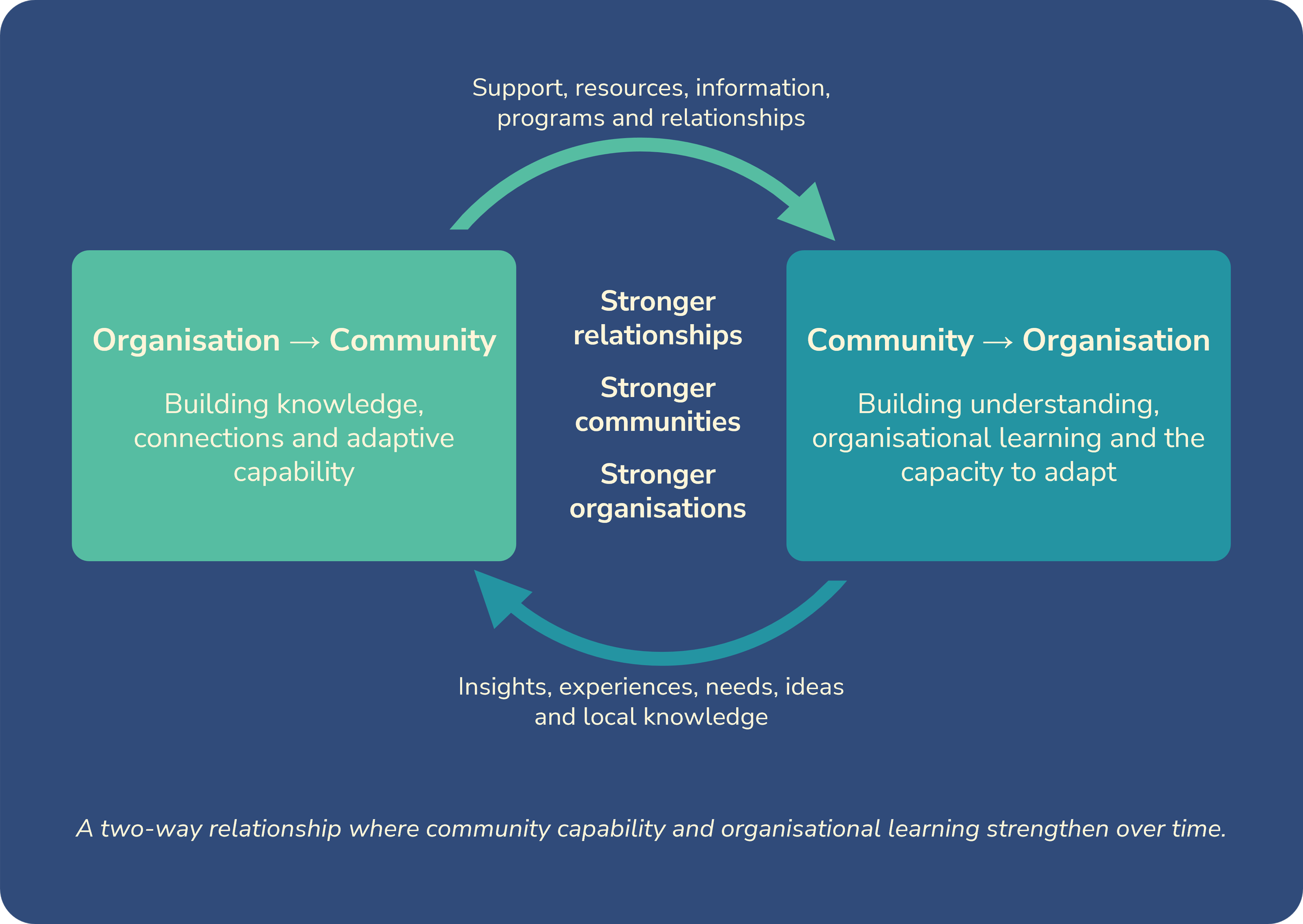
Learning in both directions
Community adaptive-capacity work can do more than build capability within communities. The conversations can also help organisations better understand the communities they serve.
Facilitated activities can reveal existing strengths, lived experience, dependencies, barriers, emerging issues and where wider organisational or systemic action may be needed.
Using these resources
These resources are designed to support everyday conversations, reflection and learning about adaptive capacity. They complement, rather than replace, official guidance, emergency planning, professional advice or resources provided by government and relevant services.